
🚗 India’s Auto-Parts Market: A Growing Engine
Over the past few years, India’s auto-parts / components industry has been on a steep upward trajectory. Some of the key trends and numbers:

The overall automotive-components industry in India recorded a turnover of about USD 80.2 billion (≈ ₹6.73 lakh crore) in FY25, representing a growth of roughly 9.6 % year-on-year. The domestic + export auto-component market is expected to keep expanding — some estimates foresee it reaching USD 200 billion by 2030. Rising vehicle production (cars, two-wheelers, commercial vehicles) — driven by a growing middle class, urbanization, increasing incomes, and road-infrastructure improvements — is fueling component demand. Beyond OEM (original equipment manufacturer) demand, the “aftermarket” for replacement parts, maintenance, and upgrades is also growing rapidly. More vehicles on the road, longer vehicle lifespans, and higher usage mean greater need for brakes, filters, suspension parts, electrical components, etc. The shift toward more advanced vehicles — including rising adoption of electric or hybrid vehicles, and more sophisticated electronics — is pushing demand for higher-spec, and sometimes specialized, components (e.g. electrical systems, battery / powertrain elements, lightweight materials).

In short: India is becoming a global automotive-component hub, supported by domestic demand, export ambitions, and a maturing aftermarket ecosystem.
✅ Challenges & Needs in a Growing Market
With growth also come challenges — and corresponding needs — for players in the supply chain:
Many component makers need reliable sheet-metal forming, pressing, stamping, roll-feeding, and tooling machinery to produce components at scale. As demand grows, there’s pressure to scale up production capacity quickly — often without the lead times or costs associated with new equipment. For smaller or mid-sized manufacturers, budget constraints may make it difficult to invest in brand-new machines. Localization and export competitiveness demand high reliability and consistency — which in turn requires durable, well-maintained machinery and tooling. When producing a variety of parts (underbody, engine components, electrical housings, filters, etc.), flexibility and versatility of equipment are valuable.
This is where a specialty exporter of used industrial / metal-working equipment can add value — by offering cost-effective, ready-to-deploy machinery that helps manufacturers ramp up quickly and stay competitive.
🏭 Who Is DAINA Corporation Ltd.
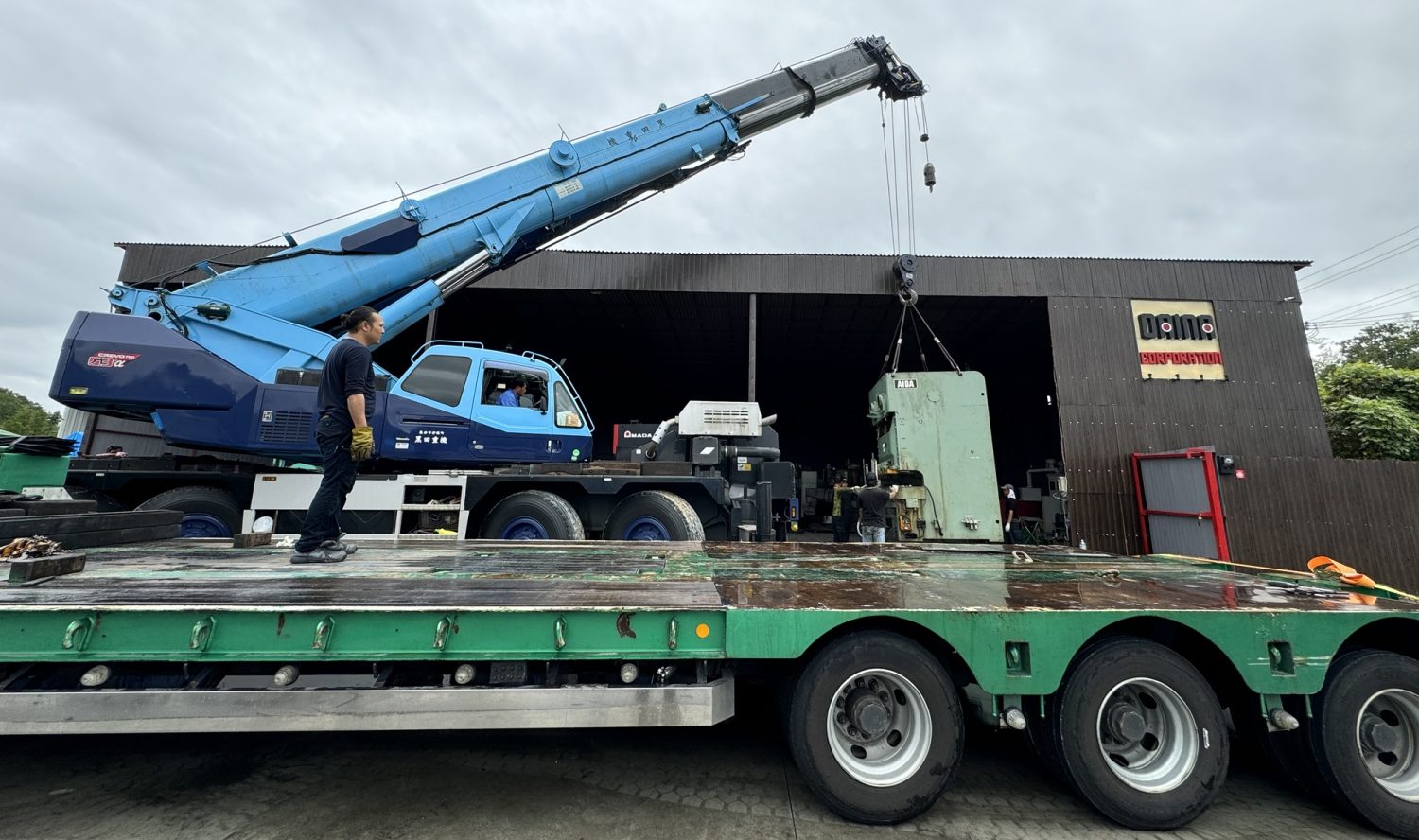
DAINA Corporation Ltd. is a Japanese company that specializes in exporting used machining and metal-working equipment (presses, roll feeders, tooling machines, etc.) from Japan to other countries — including India.

They deal in second-hand tooling machinery and metal-working machines (both conventional and CNC) suitable for manufacturing operations. Their business model serves as a bridge: redeploying perfectly functional Japanese industrial machines to markets where new-machine cost may be prohibitive. Company data (e.g. customs / import-export records) show that they actively export used presses, roll feeders, and other equipment — for instance, shipments to Indian importers.
In effect, DAINA acts as an enabler — helping firms in India (or elsewhere) access quality manufacturing machinery at more attainable cost and lead time.
🌱 How DAINA Supports India’s Auto-Parts Growth
Given the booming demand in India’s auto-parts sector and the constraints many manufacturers face — especially smaller or newer entrants — DAINA’s services can support growth in several meaningful ways:
Lowering entry barriers: By supplying used but reliable machinery (presses, feeders, tooling equipment), DAINA reduces capital expenditure requirements for Indian component makers. This enables startups or SMEs to enter manufacturing without committing to the high cost of brand-new machines.
Faster ramp-up: Because the machines are pre-owned and available, manufacturers can scale up operations more quickly compared to ordering new equipment — which often has long lead times. Supporting diversification / variety: With varied machine types (presses, feeders, roll-feeders, metal-working tools), component plants can produce a wide range of parts (engine components, body parts, under-body, electrical housings, etc.). This flexibility helps meet both OEM and aftermarket demand.
Cost-effectiveness improving competitiveness: Lower machinery costs help keep manufacturing costs down — beneficial for both export-oriented producers and those competing on price domestically. Sustainable reuse and asset utilization: Reusing existing machinery — if maintained properly — is more resource-efficient and can help support sustainable manufacturing practices.
In markets like India’s — where demand is surging, but capital/resources for new machinery may be constrained — such a model helps accelerate the ramp-up of manufacturing capacity and supports overall industry growth.
📈 A Future Outlook — Why This Partnership Matters
As India marches toward becoming a major global hub for automotive components — with projections pointing toward USD 200 billion industry size by 2030 — there is huge opportunity, especially for manufacturers who can scale efficiently and cost-effectively.
By providing access to reliable, second-hand machining and metal-working equipment — especially presses, feeders, and tooling machinery — a company like DAINA can help:
Accelerate capacity expansion Enable smaller players to enter the market Support diversified component manufacturing (OEM + aftermarket + export) Help maintain cost competitiveness in a price-sensitive market Promote sustainable practices by reusing existing industrial assets
In short: DAINA’s business model aligns well with India’s automotive-parts growth — helping meet rising demand while keeping cost, time, and entry barriers manageable.
✨ Conclusion
India’s automotive-parts market is experiencing healthy, sustained growth — driven by rising vehicle production, growing aftermarket demand, and increasing exports. At the same time, manufacturers face constraints related to capital, equipment, and flexibility. A company like DAINA Corporation Ltd., by exporting used but solid Japanese press and metal-working machinery, can play a valuable supporting role — enabling component makers to ramp up production faster, enter the market with lower costs, and contribute to India’s emergence as a global auto-components hub.
- 🏭 DAINA Corporation Ltd. – Built on Discipline, Trust, and Long-Term Vision
- DAINA MACHINERY INDIA WAREHOUSE – UNDER CONSTRUCTION 🚧
- ⭐️NEW STOCK ⭐️Asahi Okuma AOT-10B Cold Header Machine 2 units – Reliable Japanese Engineering for High-Speed Fastener Production
- ⭐️⭐️DAINA LATEST STOCK ⭐️⭐️ Reliable Japanese Used Press Machines – Ready for Production
- How DAINA Miki Yard Has Transformed into a Fully Operational Heavy Machinery Hub


You must be logged in to post a comment.